 by
by Breast size is a personal matter, but when overly large or heavy breasts begin interfering with your comfort, movement, posture, or daily activities, it may be more than a cosmetic concern. Persistent physical discomfort can affect how you exercise, sleep, work, dress, and participate in everyday activities. If you regularly experience these problems, consulting a qualified plastic surgeon about Breast Reduction Surgery in Mumbai may help you understand whether reducing breast size could improve your comfort and quality of life.
Breast reduction, also known as reduction mammoplasty, is a procedure that removes excess breast tissue, fat, and skin to create a breast size that is more proportionate to the body. The goal is not simply to make the breasts smaller but to address physical symptoms while creating a balanced breast shape.
How Can Large Breasts Affect Quality of Life?
Large or disproportionately heavy breasts can place additional strain on the neck, shoulders, upper back, and chest. They may also make physical activity uncomfortable and cause practical problems such as difficulty finding supportive clothing.
The impact varies from person to person. Some women may experience primarily physical symptoms, while others may find that breast size affects confidence, clothing choices, or participation in activities they enjoy.
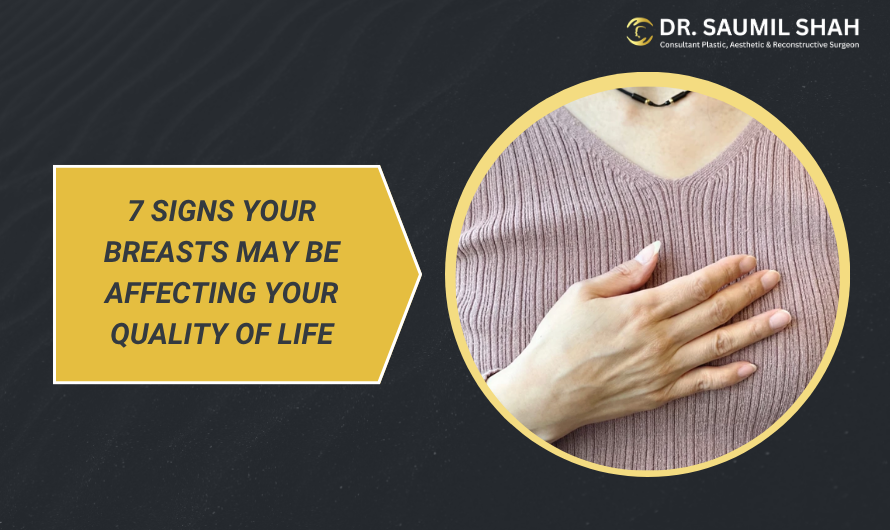
Here are seven signs that your breast size may be affecting your quality of life.
1. You Frequently Experience Back, Neck, or Shoulder Pain
One of the most common reasons women consider breast reduction is persistent discomfort in the upper body.
The additional weight of large breasts can contribute to strain around the:
- Upper back
- Neck
- Shoulders
- Chest
- Upper spine
You may notice discomfort after standing or sitting for long periods, working at a desk, walking, or performing household activities.
If pain is persistent, it is important to have it evaluated because back or neck pain can have many causes. However, if your symptoms consistently seem related to the weight of your breasts, breast reduction may be worth discussing with a qualified surgeon.
2. Your Bra Straps Leave Deep Marks
Do your bra straps regularly dig into your shoulders?
Heavy breasts can place considerable pressure on bra straps, sometimes leaving:
- Deep grooves
- Redness
- Tenderness
- Skin irritation
- Persistent discomfort
Changing bras or using wider straps may provide temporary relief, but if the underlying issue is breast weight, supportive clothing may not completely solve the problem.
During a consultation, your surgeon can determine whether reducing breast volume may help relieve this pressure.
3. You Develop Rashes or Skin Irritation Under Your Breasts
The skin beneath large breasts can remain warm and moist, creating an environment where irritation can develop.
Some women experience:
- Redness
- Chafing
- Rashes
- Skin irritation
- Discomfort beneath the breast fold
Keeping the area dry, wearing appropriate clothing, and treating skin problems can help. However, recurrent irritation may continue when there is substantial skin-to-skin contact.
If you repeatedly experience these problems, mention them during your consultation. Your surgeon can assess whether breast reduction could address the underlying physical burden.
4. Exercise Has Become Difficult or Uncomfortable
Physical activity is an important part of a healthy lifestyle, but large breasts can make certain forms of exercise uncomfortable.
Running, jumping, aerobics, gym workouts, and sports may cause:
- Breast discomfort
- Excessive movement
- Difficulty finding adequate support
- Shoulder or back strain
- Self-consciousness
As a result, some women avoid activities they would otherwise enjoy.
Breast reduction may help some appropriately selected patients participate more comfortably in physical activities, although the extent of improvement varies.
5. You Notice Changes in Your Posture
Heavy breasts may contribute to changes in how you hold your upper body.
You may find yourself:
- Hunching your shoulders
- Leaning forward
- Adjusting your posture to compensate for breast weight
- Feeling tired after maintaining an upright position
Poor posture can have multiple causes, so breast size should not automatically be considered the sole reason.
However, if posture difficulties occur alongside chronic breast-related neck, shoulder, or back discomfort, it is worth discussing them with a medical professional.
6. Finding Clothes That Fit Has Become Frustrating
Clothing should make you feel comfortable—not become something you constantly have to work around.
Some women with larger breasts find that:
- Shirts pull across the chest
- Buttons do not sit properly
- Certain dresses fit poorly
- Finding supportive bras is difficult
- They need to buy clothing based on bust size rather than overall body shape
This can make shopping frustrating and limit the styles you feel comfortable wearing.
While clothing preferences alone do not necessarily mean you need surgery, persistent difficulty finding comfortable clothing can be one part of the overall impact that breast size has on your daily life.
7. Your Breast Size Affects Your Confidence or Daily Activities
The impact of large breasts isn’t always physical.
You may feel uncomfortable in certain social situations, avoid particular clothing, or feel self-conscious during exercise, travel, or other activities.
Some women also find everyday tasks such as sleeping comfortably, carrying out household activities, or maintaining an active lifestyle more difficult.
These concerns are valid and deserve to be discussed without embarrassment.
Breast reduction should not be viewed as something you “have to” do because of appearance. The decision is personal and should be based on your comfort, health, goals, and informed understanding of the procedure.
What Is Breast Reduction Surgery?
Breast reduction surgery involves removing a planned amount of excess breast tissue, fat, and skin. The remaining tissue is reshaped, and the nipple and areola may be repositioned to create a more balanced breast contour.
The exact surgical technique depends on factors such as:
- Breast size and shape
- Amount of tissue being removed
- Skin quality
- Degree of breast sagging
- Nipple position
- Body proportions
- Desired outcome
The procedure is customized for each patient rather than following exactly the same approach for everyone.
Who May Consider Breast Reduction?
Breast reduction may be considered by women whose breast size causes persistent physical or practical problems.
You may be a potential candidate if you experience:
- Chronic neck, shoulder, or back discomfort
- Bra strap grooves
- Recurrent skin irritation beneath the breasts
- Difficulty exercising
- Difficulty finding comfortable clothing
- Limitations in daily activities
- Dissatisfaction with disproportionately large breasts
Your surgeon will evaluate your overall health, breast anatomy, symptoms, expectations, and goals before determining whether surgery is appropriate.
Is Breast Reduction Only for Cosmetic Reasons?
No.
Although breast reduction can change breast size and shape, many women consider the procedure because of physical symptoms and limitations.
Potential benefits may include:
- Reduced breast weight
- Improved physical comfort
- Easier participation in physical activity
- Less pressure from bra straps
- Easier clothing selection
- Improved body proportions
- Greater confidence in daily activities
However, individual outcomes vary, and breast reduction cannot guarantee that every source of neck, back, or shoulder pain will disappear.
What Happens During the Procedure?
The specific technique varies according to your anatomy and treatment plan.
Generally, breast reduction involves:
Step 1: Planning and marking
Before surgery, your surgeon marks the breasts while considering symmetry, breast shape, and the planned reduction.
Step 2: Incisions
Different incision patterns may be used depending on the amount of tissue that needs to be removed and the degree of reshaping required.
Step 3: Removal of excess tissue
Excess breast tissue, fat, and skin are removed according to the surgical plan.
Step 4: Reshaping
The remaining breast tissue is repositioned and shaped to create a more proportionate contour.
Step 5: Nipple repositioning
When necessary, the nipple and areola are repositioned to a more appropriate position on the breast.
Step 6: Closing the incisions
The incisions are closed carefully, leaving scars that generally become less noticeable as they heal.
What About Scars After Breast Reduction?
Scarring is an important consideration before surgery.
Depending on the technique used, scars may be located around the areola and extend vertically downward, with some patients also requiring a horizontal component beneath the breast.
The final appearance of scars varies based on:
- Surgical technique
- Individual healing
- Skin characteristics
- Genetics
- Postoperative care
- Sun exposure
Scars usually change and mature over time rather than looking the same immediately after surgery.
Your surgeon should explain the expected incision pattern before you decide to proceed.
What Is Recovery Like?
Recovery varies from patient to patient.
You can generally expect some swelling, bruising, tightness, and soreness during the initial healing period.
Your surgeon may advise you to:
- Wear a recommended support garment
- Keep the incision areas clean and cared for
- Avoid strenuous exercise initially
- Avoid heavy lifting until cleared
- Attend follow-up appointments
- Take prescribed medication as instructed
Many patients gradually return to normal activities as healing progresses, but the exact timeline should be individualized.
Can Breast Size Increase Again After Reduction?
Breast reduction removes a portion of existing breast tissue, but it cannot prevent future changes to the remaining tissue.
Breast size and shape can change because of:
- Significant weight gain
- Pregnancy
- Hormonal changes
- Ageing
- Natural changes in breast tissue
Maintaining a relatively stable weight may help preserve the result, although some changes over time are natural.
Can Breast Reduction Affect Breastfeeding?
Breastfeeding ability after reduction can vary depending on the surgical technique and how much breast tissue and ductal structures are preserved.
Some women are able to breastfeed after surgery, while others may have difficulty producing enough milk.
If future breastfeeding is important to you, discuss it with your surgeon before the procedure so that it can be considered during surgical planning.
What Should You Ask During Your Consultation?
Before undergoing Breast Reduction Surgery in Mumbai, consider asking your surgeon:
- How much breast tissue may be removed?
- Which surgical technique is appropriate for me?
- Where will the scars be located?
- How will my breast shape change?
- Will my nipple position change?
- How long will recovery take?
- When can I return to exercise?
- Could the procedure affect breastfeeding?
- What complications should I know about?
- How can I care for my scars after surgery?
A detailed consultation allows you to understand the procedure rather than making a decision based solely on photographs or online information.
Choosing the Right Surgeon
Breast reduction combines functional and aesthetic considerations, so careful surgical planning is important.
When searching for Breast Reduction Surgery in Mumbai, consider the surgeon’s qualifications, experience with breast procedures, approach to patient assessment, before-and-after results, surgical facility, safety protocols, and follow-up care.
A good consultation should feel like a two-way conversation. Your surgeon should understand why you want the procedure and explain what can realistically be achieved.
Frequently Asked Questions
How do I know if my breasts are too large for my body?
There is no single breast size that is considered “too large” for everyone. If your breast size causes persistent physical discomfort, limits activities, creates skin problems, or significantly affects your daily life, it may be worth discussing your concerns with a qualified surgeon.
Does breast reduction permanently reduce breast size?
The removed tissue does not grow back in the same way, but the remaining breast tissue can change with weight fluctuations, pregnancy, hormonal changes, and ageing.
Will breast reduction get rid of back pain completely?
It may reduce breast-related strain and discomfort for some patients, but back pain has many possible causes. Breast reduction cannot guarantee complete resolution of back pain.
Can breast reduction improve exercise?
Some women find physical activity more comfortable after reducing breast weight. However, recovery restrictions mean strenuous exercise needs to be avoided initially and resumed gradually according to your surgeon’s advice.
Does breast reduction leave scars?
Yes. Breast reduction requires incisions, so some degree of scarring is expected. The location and extent of scars depend on the technique and amount of reshaping required.
Is breast reduction only suitable for women with extremely large breasts?
No. Suitability is not determined by one specific breast size. Your symptoms, breast proportions, anatomy, health, and personal goals are all considered.
Final Thoughts
Large breasts can affect much more than appearance. If you regularly experience neck or back discomfort, bra strap pressure, skin irritation, difficulty exercising, posture problems, clothing limitations, or other day-to-day challenges, it may be worth exploring whether your breast size is contributing to these concerns.
Breast Reduction Surgery in Mumbai can be an option for appropriately selected patients who want to reduce breast volume and improve physical comfort and proportions. Dr. Saumil Shah can assess your individual concerns, discuss the appropriate surgical approach, and explain the potential benefits, limitations, scars, recovery, and risks.
Book a consultation with Dr. Saumil Shah to understand whether breast reduction may be suitable for your needs and what you can realistically expect from the procedure.