 by
by Fine lines and mild skin laxity are some of the earliest visible signs of facial ageing. Over time, the skin gradually loses collagen, elasticity, and some of its natural support. As a result, the face may begin to look less firm, fine lines can become more noticeable, and areas that once appeared fuller may start to look slightly hollow.
If you are looking for a gradual approach to facial rejuvenation, Sculptra treatment in Mumbai may be an option to discuss with a qualified aesthetic doctor. Unlike treatments that primarily add immediate volume, Sculptra is designed to stimulate the body’s natural collagen production over time. This can help improve the appearance of skin quality, mild laxity, and certain signs associated with facial volume loss.
However, Sculptra is not a facelift and cannot remove significant excess skin. Understanding what the treatment can realistically achieve is important before deciding whether it is right for you.
What Is Sculptra?
Sculptra is an injectable treatment based on poly-L-lactic acid (PLLA), a biocompatible material that stimulates collagen production.
Rather than simply filling a wrinkle, the treatment works gradually. As collagen production increases, the treated areas may develop improved fullness and support, while the skin can appear smoother and more refreshed.
This gradual process is one of the reasons some patients prefer Sculptra over treatments that create a more immediate change.
Why Do Fine Lines and Skin Laxity Develop?
Fine lines and loose-looking skin can develop due to several changes that occur naturally with age.
Declining collagen production
Collagen provides much of the skin’s structural support. With ageing, the body produces less collagen, which can contribute to reduced firmness and the development of fine lines.
Loss of elasticity
The skin gradually becomes less elastic and may not bounce back as easily as it did when you were younger.
Facial volume loss
Ageing can also involve changes in the fat compartments beneath the skin. Loss or redistribution of facial volume may make lines and folds appear more prominent.
Sun exposure
Long-term exposure to ultraviolet radiation can contribute to premature skin ageing, including fine lines and changes in skin texture.
Lifestyle factors
Smoking, poor sleep, nutritional deficiencies, and other lifestyle factors can also influence overall skin health.
Because ageing involves several different processes, a combination of treatments may sometimes be more appropriate than relying on one procedure alone.
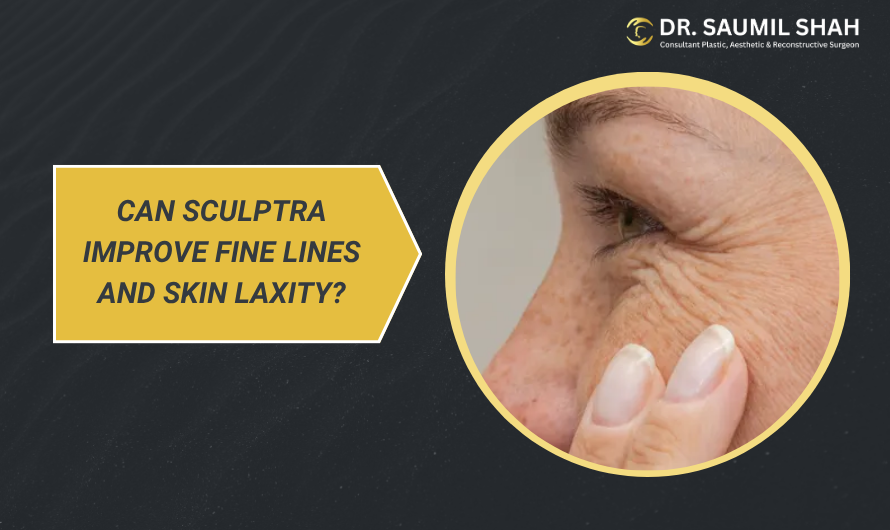
Can Sculptra Improve Fine Lines?
Sculptra may help improve the appearance of certain fine lines indirectly by stimulating collagen and improving the underlying support of the skin.
It is important to understand that Sculptra is not primarily a wrinkle-filling treatment.
Traditional fillers can provide volume directly beneath or within targeted areas, depending on the product and technique. Sculptra takes a different approach by encouraging gradual collagen production.
As collagen develops, the skin may appear:
- Smoother
- Fuller
- Firmer
- More supported
- More youthful-looking
The extent of improvement varies between patients.
Can Sculptra Improve Skin Laxity?
Sculptra may be useful for mild skin laxity associated with collagen loss and facial volume changes.
As collagen production increases, the skin may develop better structural support.
However, the treatment has limitations.
Sculptra is generally not intended to correct significant:
- Loose skin
- Jowling
- Neck sagging
- Tissue descent
- Excess skin
If you have substantial facial sagging, a surgical facelift or another treatment may provide a more appropriate level of correction.
A consultation is important to determine whether the degree of laxity you have is suitable for an injectable approach.
How Does Sculptra Work?
The treatment works gradually rather than creating its final effect immediately.
Step 1: Assessment
Your doctor evaluates your facial structure, skin quality, volume loss, and treatment goals.
Step 2: Treatment planning
Specific areas are selected based on your anatomy and the type of correction required.
Step 3: Injection
Sculptra is injected into the planned areas using an appropriate technique.
Step 4: Collagen stimulation
The PLLA particles gradually stimulate the body’s collagen-producing response.
Step 5: Gradual improvement
As new collagen develops, the treated areas may gradually appear more supported and youthful.
This process takes time, so patience is an important part of the treatment.
How Long Does It Take to See Results?
One of the biggest differences between Sculptra and many traditional fillers is the gradual nature of the results.
Some temporary fullness may be noticeable shortly after treatment due to the injection process, but this is not the same as the final collagen-related improvement.
Visible changes generally develop progressively over the following weeks and months.
The timeline varies depending on:
- Your age
- Skin condition
- Degree of collagen loss
- Treatment areas
- Number of sessions
- Individual response
Your doctor can give you a more personalised expectation after examining your skin and facial structure.
How Many Sessions Are Usually Needed?
There is no universal treatment schedule.
Some patients may achieve their desired improvement with a limited treatment plan, while others may require multiple sessions.
The number of treatments can depend on:
- Degree of facial volume loss
- Skin laxity
- Areas being treated
- Desired outcome
- Individual response to treatment
Sculptra is generally planned around the patient’s needs rather than a fixed number of injections for everyone.
Which Areas Can Be Treated?
Sculptra may be considered for selected areas affected by facial volume loss and collagen depletion.
Depending on your anatomy and treatment goals, areas may include:
- Cheeks
- Temples
- Mid-face
- Lower face
- Other areas where loss of facial support contributes to an aged appearance
The treatment area should always be selected by a qualified medical professional.
Not every wrinkle or facial area should be treated with Sculptra.
Sculptra vs Dermal Fillers for Fine Lines
Sculptra and traditional dermal fillers are not interchangeable.
| Feature | Sculptra | Dermal Fillers |
| Main mechanism | Stimulates collagen production | Adds volume directly |
| Results | Gradual | Often visible sooner |
| Main purpose | Gradual restoration and support | Volume, contouring, or wrinkle correction depending on filler |
| Treatment approach | Progressive | Targeted |
| Longevity | Varies by patient and treatment plan | Depends on product and treatment area |
| Ideal use | Selected volume loss and collagen-related ageing | Specific folds, lines, lips, cheeks, and contours depending on product |
The right choice depends on your facial anatomy and what you want to improve.
In some cases, different treatments may complement each other.
Can Sculptra Make Skin Firmer?
Sculptra may improve the appearance of skin firmness by encouraging collagen production.
However, “firmer” should not be confused with surgical skin tightening.
If your skin has mild laxity, improving collagen support may make it appear smoother and more supported.
If there is substantial loose skin, however, an injectable collagen stimulator may not provide enough correction.
Can Sculptra Restore Lost Facial Volume?
Yes, Sculptra can be used to address certain types of facial volume loss through gradual collagen stimulation.
This may be particularly relevant when ageing has caused areas such as the cheeks or temples to appear less full.
However, the treatment does not necessarily replace the immediate structural correction provided by traditional dermal fillers.
The best approach depends on the type and location of your volume loss.
Will Sculptra Give an Overfilled Appearance?
Sculptra’s gradual mechanism may appeal to patients who prefer a subtle change.
Because the collagen-related improvement develops progressively, the face does not necessarily undergo a dramatic immediate transformation.
However, natural-looking results depend heavily on:
- Appropriate patient selection
- Product quantity
- Treatment areas
- Injection technique
- Facial proportions
- Overall treatment planning
No injectable treatment should be approached with the goal of simply adding as much volume as possible.
Is Sculptra Suitable for Younger Patients?
Age alone does not determine whether someone is suitable for Sculptra.
The more important considerations are:
- The condition of your skin
- Degree of volume loss
- Skin laxity
- Facial structure
- Treatment goals
- Overall health
Sculptra is generally considered as part of an individualised facial rejuvenation plan rather than simply a treatment based on age.
What Are the Side Effects?
Like other injectable treatments, Sculptra can cause temporary side effects.
Common effects can include:
- Redness
- Swelling
- Bruising
- Tenderness
- Pain at the injection site
Less common complications can include the development of small lumps or nodules beneath the skin.
Following your doctor’s instructions before and after treatment is important.
If you experience an unusual or persistent reaction, contact your treating doctor for assessment.
What Should You Do Before Sculptra Treatment?
During your consultation, tell your doctor about:
- Previous cosmetic treatments
- Current medications
- Allergies
- Existing medical conditions
- Previous reactions to injectable treatments
- Your specific aesthetic goals
Your doctor can then determine whether Sculptra is appropriate and explain any preparation required.
What Should You Expect After Treatment?
Immediately after the procedure, the treated areas may appear swollen or slightly fuller.
As these temporary effects settle, the initial appearance can change.
The collagen-stimulating effects develop gradually, so you should not judge the final outcome immediately after treatment.
Your doctor may provide specific instructions about post-treatment care, including any massage or activity recommendations relevant to your treatment plan.
How Long Can the Results Last?
Sculptra can provide long-lasting improvement, but the duration varies from person to person.
Factors that may influence the longevity of results include:
- Age
- Skin condition
- Lifestyle
- Degree of volume loss
- Number of sessions
- Individual collagen response
Sculptra does not stop the natural ageing process, so facial changes will continue over time.
Maintenance treatments may be considered when appropriate.
Can Sculptra Replace a Facelift?
For mild ageing changes, Sculptra may offer gradual improvement without surgery.
But it is important not to compare the two as though they provide the same type of result.
A facelift can address significant tissue descent and excess skin by surgically repositioning tissues and removing excess skin.
Sculptra does not remove loose skin or surgically reposition facial tissues.
Therefore:
Mild laxity and volume loss → Sculptra may be considered
Significant sagging and excess skin → Surgical or other lifting treatments may be more appropriate
Your facial anatomy and goals determine which approach makes sense.
How to Get Natural-Looking Results
The goal of facial rejuvenation should be to refresh your appearance while maintaining your natural facial identity.
A personalised plan should consider:
- Facial proportions
- Existing volume
- Skin quality
- Degree of laxity
- Age-related changes
- Desired level of correction
Rather than trying to eliminate every fine line, the treatment can focus on improving overall facial balance and skin support.
Choosing a Doctor for Sculptra Treatment
Sculptra is an injectable medical treatment, so choosing an appropriately qualified practitioner is important.
When considering Sculptra treatment in Mumbai, look for a doctor who understands facial anatomy and can evaluate whether collagen stimulation is suitable for your particular concerns.
During your consultation, ask about:
- Whether Sculptra is appropriate for you
- Areas that will be treated
- Number of sessions
- Expected timeline
- Potential side effects
- Alternative treatment options
- Follow-up care
A personalised treatment plan is more important than simply choosing a treatment based on an advertised price or package.
Frequently Asked Questions
Can Sculptra reduce fine lines?
Sculptra may improve the appearance of certain fine lines indirectly by stimulating collagen and improving facial support. It is not primarily designed to fill individual wrinkles immediately.
Does Sculptra tighten loose skin?
It may improve the appearance of mild skin laxity associated with collagen loss, but it cannot remove significant excess skin or provide the same lifting effect as surgery.
How quickly does Sculptra work?
Sculptra works gradually. Collagen-related improvements develop over time rather than appearing immediately after injection.
Is Sculptra better than Botox for fine lines?
They address different concerns. Botox works by temporarily reducing muscle activity responsible for certain dynamic lines, while Sculptra stimulates collagen. The appropriate treatment depends on the type and location of your lines.
Can Sculptra restore cheek volume?
Sculptra may help improve certain types of cheek volume loss through gradual collagen stimulation. The appropriate treatment depends on your facial anatomy and degree of volume loss.
How long do Sculptra results last?
Results can be long-lasting, but longevity varies between individuals. Your doctor can discuss realistic expectations based on your treatment plan and response.
Final Thoughts
Fine lines and mild skin laxity are natural parts of ageing, but there are treatment options that can help improve how the skin looks and feels. Sculptra treatment in Mumbai may be suitable for selected patients who want gradual improvement in facial volume, collagen support, and the appearance of mild skin laxity.
The treatment is not a replacement for a facelift and cannot remove significant loose skin. The most appropriate option depends on your individual facial structure, skin quality, degree of ageing, and expectations.
If you are considering Sculptra, Dr. Saumil Shah can assess your skin and facial proportions and help determine whether collagen-stimulating treatment is appropriate for you. Book a consultation to discuss your concerns and understand what kind of improvement you can realistically expect.