 by
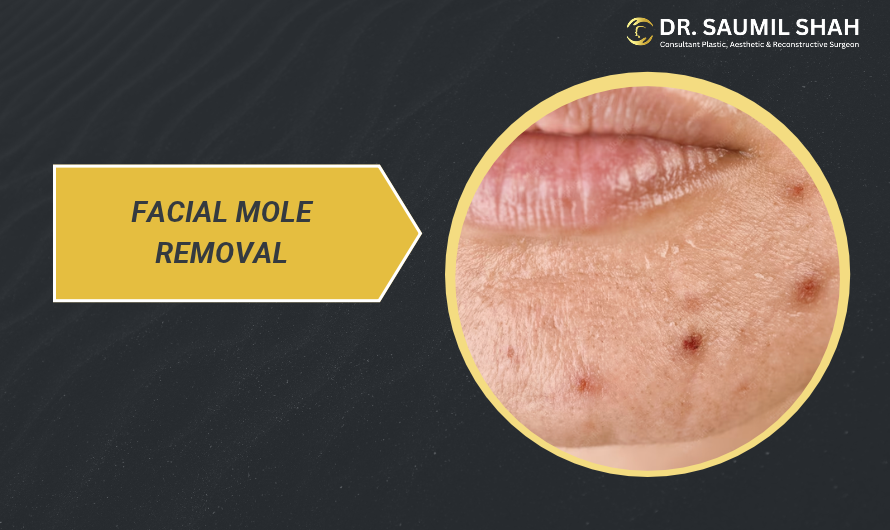
A mole on the face may be a small feature, but depending on its size, colour, shape and location, it can influence a person’s overall appearance. Some people are comfortable with their moles, while others consider removal because a mole is prominent, raised, frequently irritated or affects their confidence.
Facial mole removal is a commonly performed minor procedure, but the right approach depends on the type of mole, its depth, location and whether it needs further medical evaluation.
If you are considering Mole Removal in Mumbai, it is important to understand the available procedures, the possibility of scarring and what recovery involves. A properly planned treatment aims to remove the mole safely while taking the appearance of the surrounding facial skin into account.
What Is Facial Mole Removal?
Facial mole removal is a procedure used to remove a mole, also known medically as a melanocytic nevus, from the skin of the face.
Moles develop when pigment-producing cells called melanocytes grow in clusters. They may be flat or raised, small or large, and can vary in colour from light brown to dark brown or black. Some are present from birth, while others develop during childhood or adulthood.
Most moles are harmless and do not require removal. However, a doctor may recommend removal when a mole:
- Causes cosmetic concern.
- Gets irritated by shaving, clothing or repeated friction.
- Is raised and frequently gets injured.
- Changes in size, shape or colour.
- Has features that require further medical examination.
The decision to remove a mole should follow an appropriate assessment. A mole that appears suspicious should not be treated as a routine cosmetic concern.
What Are the Different Types of Facial Moles?
Understanding the type of mole can help determine which removal technique may be appropriate.
1. Flat Moles
Flat moles are level with the surrounding skin and may appear brown, tan or dark in colour. They are often small and may be present for many years without changing.
Their depth and pigmentation influence the treatment options. A suspicious flat pigmented lesion needs medical assessment before any cosmetic removal is considered.
2. Raised Moles
Raised moles project above the skin surface and may be skin-coloured, brown or darker.
Depending on their depth and characteristics, they may be suitable for shave removal or surgical excision.
3. Congenital Moles
Congenital moles are present at birth or appear shortly afterwards. They can vary significantly in size, shape and depth.
Larger congenital moles may require a more detailed assessment and a carefully planned treatment approach.
4. Hairy Moles
Some raised or pigmented moles contain hair follicles. The presence of hair does not automatically indicate that a mole is abnormal.
Removal depends on the mole’s characteristics, location and the patient’s concerns.
What Are the Different Facial Mole Removal Procedures?
There is no single removal technique suitable for every mole. The doctor considers its appearance, depth, location and medical significance before recommending a procedure.
1. Shave Excision
Shave excision is commonly considered for selected raised moles that extend above the surrounding skin.
<AsyncImage query=”dermatologist shave excision raised benign mole medical procedure illustration” aspectRatio=”16:9″ width=”100%”/>
During the procedure, the doctor uses a sterile surgical blade to remove the raised portion of the mole, generally under local anaesthesia.
How it works:
- The treatment area is cleaned and numbed.
- The raised portion of the mole is carefully removed.
- The wound is allowed to heal, sometimes with additional measures to control bleeding.
- The removed tissue may be sent for laboratory examination when indicated.
Potential advantages:
- Usually a relatively short procedure.
- Often does not require stitches.
- May be suitable for selected raised moles.
- Can leave a smaller or less noticeable mark than some larger excisions, depending on the mole and healing.
Important consideration: Shave removal may leave a shallow depression or a change in skin colour. Some moles can also recur if deeper mole cells remain. It is not appropriate for every suspicious pigmented lesion.
2. Surgical Excision
Surgical excision involves removing the mole along with a planned margin of surrounding skin when clinically required.
<AsyncImage query=”surgical mole excision facial skin procedure medical illustration sutures” aspectRatio=”16:9″ width=”100%”/>
This method may be recommended when the mole is deeper, when complete removal is required or when the doctor needs a tissue sample for detailed examination.
How it works:
- Local anaesthesia is administered.
- The mole is removed using a surgical instrument.
- The wound is closed with sutures when necessary.
- The removed tissue is sent for histopathological examination when indicated.
Potential advantages:
- Allows removal of the mole more completely.
- Provides tissue for laboratory analysis.
- Can be appropriate for moles that require diagnostic evaluation.
Important consideration: Surgical excision creates a linear scar, although the surgeon can plan its position and direction to make it as inconspicuous as possible. The final appearance depends on the size and location of the mole, closure technique and individual healing.
3. Laser Treatment for Selected Pigmented Lesions
<AsyncImage query=”dermatology laser treatment small benign pigmented facial skin spot procedure” aspectRatio=”16:9″ width=”100%”/>
Laser treatment may be considered for certain carefully diagnosed benign pigmented lesions. However, it is not a universal method for removing melanocytic moles.
Lasers work by targeting pigment or selected skin structures, depending on the technology used.
Potential advantages:
- May be useful for selected superficial pigmented lesions.
- Does not always require a surgical incision.
- May be considered when the diagnosis is clear and laser treatment is appropriate.
Important consideration: Laser treatment may not remove deeper mole cells and may not provide tissue for histopathological examination. It should not be used to destroy a mole that has suspicious features or requires biopsy. The doctor should first establish the diagnosis and decide whether laser treatment is suitable.
4. Electrosurgery for Selected Benign Skin Growths
Electrosurgery uses controlled electrical energy to remove or destroy selected superficial skin growths.
It may be considered for certain raised benign lesions, depending on their diagnosis and depth.
However, electrosurgery is not appropriate for every pigmented mole. If the lesion needs laboratory examination, a method that preserves a suitable tissue sample may be necessary.
Shave Excision vs Surgical Excision vs Laser: Which Is Better?
Each technique has different uses and limitations.
| Feature | Shave Excision | Surgical Excision | Laser Treatment |
| Common use | Selected raised moles | Deeper or suspicious moles requiring complete removal | Selected diagnosed benign pigmented lesions |
| Incision | No conventional linear incision | Surgical incision | No conventional surgical incision |
| Stitches | Often not required | Often required | Usually not required |
| Tissue for testing | May provide a tissue sample | Provides a tissue sample | Generally does not provide an intact tissue sample |
| Scarring | May leave a shallow mark or colour change | Usually leaves a linear scar | May cause pigment changes or textural marks |
| Recurrence | Possible if deeper cells remain | Depends on completeness of removal and diagnosis | Possible if pigment-producing cells remain |
The best method is not necessarily the one with the smallest incision. The priority is to select a safe technique that suits the mole and allows appropriate diagnosis when required.
Does Facial Mole Removal Leave a Scar?
This is one of the most common concerns among people considering facial mole removal.
The honest answer is that any procedure that removes tissue from the skin can leave a mark or scar. However, its appearance varies depending on several factors.
1. Size and Depth of the Mole
Small, superficial moles may require less extensive removal. Deeper or larger moles may need a wider or deeper procedure, which can affect the final scar.
2. Location on the Face
The forehead, cheeks, nose, chin and area around the lips have different skin characteristics and natural tension lines.
The location of the mole influences incision planning and how the scar may heal.
3. Removal Technique
Shave excision may leave a shallow depressed mark or a lighter or darker patch. Surgical excision generally leaves a linear scar, which may become less noticeable as it matures.
Laser treatment may cause temporary or persistent pigmentation changes in some patients.
4. Skin Type and Healing Response
Some people naturally develop thicker or raised scars. A history of keloids or hypertrophic scarring is important to discuss before treatment.
Skin pigmentation can also change after inflammation or injury, particularly in individuals prone to post-inflammatory hyperpigmentation.
5. Aftercare
Following wound-care instructions can help reduce irritation and support healing.
Picking at the wound, exposing it to excessive sunlight or neglecting wound care may affect the final appearance.
What Is the Healing Process After Facial Mole Removal?
Recovery depends on the removal method, the size of the treated area and individual skin healing.
A general recovery process may include the following stages.
First 24–48 Hours
Mild redness, swelling or tenderness may occur around the treated area. A small amount of bleeding or fluid may be present, depending on the technique.
First Week
The wound begins to heal. A crust or scab may form, particularly after shave removal. If stitches are used, the doctor will advise when they should be reviewed or removed.
Following Two to Three Weeks
The surface wound usually continues to close and settle. Mild redness or discolouration may remain even after the skin has healed.
Following Months
The scar gradually matures. Its colour, texture and visibility may continue to change over several months.
These are general stages rather than a fixed recovery schedule. Deeper excisions may take longer to heal than superficial procedures.
How to Care for Your Skin After Mole Removal
Proper aftercare is important, especially when the mole is removed from a visible area of the face.
Follow the treating doctor’s instructions. General care may include:
- Keep the treated area clean as advised.
- Apply the recommended ointment or dressing if prescribed.
- Avoid picking, scratching or peeling the scab.
- Do not apply makeup directly over an open wound.
- Avoid harsh exfoliants, retinoids or strong active skincare products on the healing area until cleared.
- Protect the area from direct sunlight.
- Use broad-spectrum sunscreen once the wound has closed and the doctor confirms it is appropriate.
- Attend follow-up appointments as advised.
If you notice increasing pain, spreading redness, pus, fever or persistent bleeding, contact your treating doctor.
Can a Facial Mole Grow Back After Removal?
Yes, some moles can recur after removal, particularly when deeper mole cells remain in the skin.
Recurrence may be more likely after certain superficial removal techniques. The appearance of a returning mole should not automatically be assumed to be harmless.
If a mole reappears, develops new pigmentation or changes in appearance after removal, have it examined by a dermatologist.
The doctor may recommend further assessment or removal depending on the clinical findings.
When Should You Get a Mole Checked Before Removal?
Not every mole is harmless, and cosmetic removal should never replace proper medical evaluation.
A mole should be assessed promptly if you notice any of the following ABCDE warning signs:
- A – Asymmetry: One half looks different from the other.
- B – Border: The edges are irregular, blurred or uneven.
- C – Colour: The mole has multiple or uneven colours.
- D – Diameter: It is larger than approximately 6 mm, although melanomas can also be smaller.
- E – Evolving: It changes in size, shape, colour or appearance over time.
Other warning signs include itching, bleeding, crusting or a new unusual spot that looks different from your other moles.
A dermatologist may examine the lesion using dermoscopy and recommend a biopsy or surgical removal if necessary. If tissue is removed because of a medical concern, histopathological examination helps establish the diagnosis.
Do not attempt to remove a suspicious mole with cosmetic laser treatment or home remedies before it has been assessed.
Is Facial Mole Removal Painful?
Facial mole removal is generally performed using local anaesthesia.
You may feel a brief sting when the anaesthetic is injected, but the treatment area should become numb before the procedure begins.
Some mild tenderness, swelling or discomfort may occur after the anaesthesia wears off. The level of discomfort depends on the removal technique and size of the treated area.
Your doctor can explain what to expect and recommend appropriate aftercare.
How to Choose the Right Doctor for Mole Removal in Mumbai?
Facial mole removal requires attention to both medical safety and cosmetic outcome. Choosing the right doctor is important because the procedure involves visible skin and, in some cases, the need to assess a potentially suspicious lesion.
Before proceeding, consider:
- Confirm the diagnosis: The doctor should assess whether the spot is a mole or another type of skin growth.
- Discuss the removal method: Ask why shave excision, surgical excision or another approach is recommended.
- Understand scarring: Discuss the likely scar location, healing process and realistic cosmetic outcome.
- Ask about tissue testing: Find out whether the removed tissue will be sent for histopathology when clinically indicated.
- Check relevant experience: Choose a suitably qualified doctor with experience in facial skin procedures.
- Understand aftercare: Ask about wound care, sun protection and follow-up visits.
If you are considering Mole Removal in Mumbai, a consultation can help determine the safest and most appropriate approach for your particular mole.
Frequently Asked Questions About Mole Removal in Mumbai
1. What is the best method for facial mole removal?
The best method depends on the mole’s size, depth, location and medical characteristics. Shave excision may suit selected raised benign moles, while surgical excision may be recommended for deeper or suspicious lesions. Laser treatment is limited to selected diagnosed benign lesions.
2. Does facial mole removal leave a permanent scar?
A scar or mark is possible after any procedure that removes skin tissue. Its appearance depends on the removal technique, mole size, location, skin type and healing response. Scars generally mature over time but may not disappear completely.
3. Can a mole be removed without stitches?
Yes. Selected raised moles may be treated using shave excision, which often does not require stitches. However, deeper moles or lesions requiring complete surgical removal may need sutures.
4. How long does it take for the skin to heal after mole removal?
Superficial wounds may heal within a couple of weeks, while deeper surgical excisions can take longer. Redness and scar maturation may continue for several months after the surface has healed.
5. Can laser treatment remove facial moles permanently?
Laser treatment may reduce or remove pigment in selected benign lesions, but it may not eliminate deeper mole cells. Pigmentation can return, and laser treatment does not provide an intact tissue sample for laboratory examination.
6. Can I apply makeup after facial mole removal?
Avoid applying makeup directly over an open or healing wound. You can generally resume using products on the treated area once the skin has closed and your doctor confirms it is safe.
7. Is mole removal a cosmetic or medical procedure?
It can be either. A harmless mole may be removed for cosmetic reasons or because it causes irritation. A suspicious mole may require removal or biopsy for medical diagnosis.
8. Can a mole grow back after removal?
Yes. Recurrence can occur when some mole cells remain after removal. If a mole grows back or develops new changes, it should be examined by a dermatologist.
Conclusion
Facial mole removal can improve the appearance of a prominent or unwanted mole, but choosing the correct removal method is essential. Shave excision, surgical excision and selected laser procedures each have different uses, benefits and limitations.
Scarring cannot be ruled out completely, but careful treatment planning, appropriate technique and proper aftercare can help support a favourable healing outcome.
If you are considering Mole Removal in Mumbai, consult Dr. Saumil Shah to discuss your concerns, understand the available removal options and determine an approach suited to the mole’s characteristics and your skin. Any mole with suspicious or changing features should be medically assessed before cosmetic removal.